
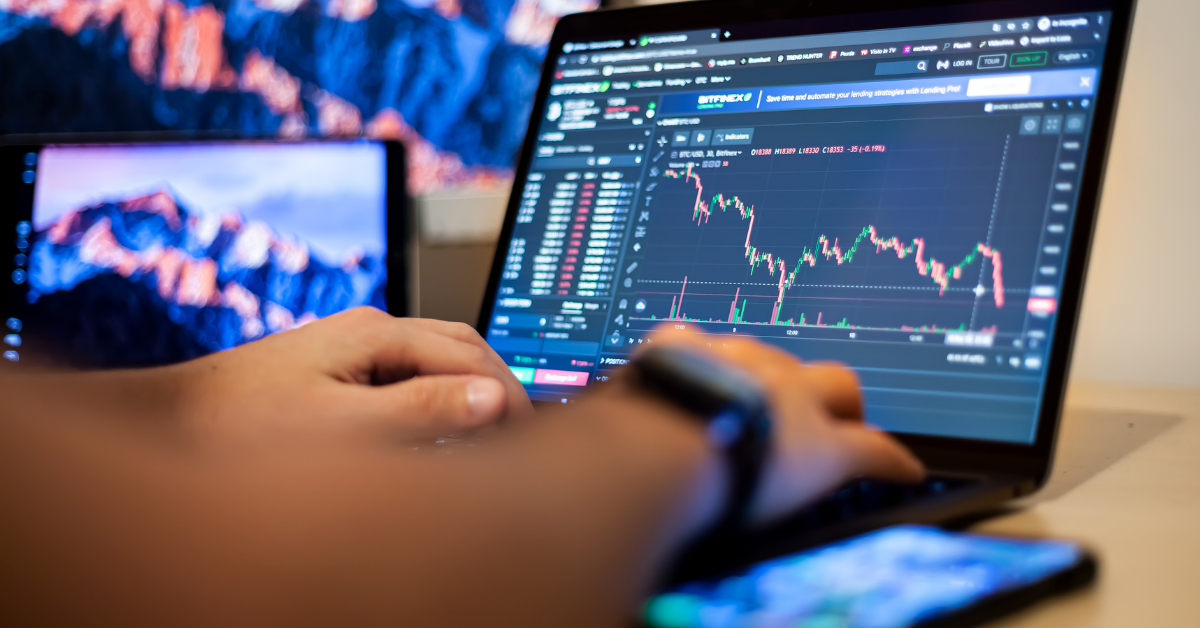
Paper trading is a term you'll come across quite early when you first start trading, particularly if your objective is to receive funding from a prop business. It sounds straightforward, almost archaic, like making up trades on a notebook. And to be honest, that's essentially where it began. A digital powerhouse of practice tools, simulators, and trading platforms that can seem nearly equal to the real thing has replaced paper trading in the modern era.
Paper trading is boot camp for those who aspire to work for prop firms; it's not just practice. Let's discuss what paper trading is exactly, why prop firm traders care about it, and the best platforms and software to use.
What Is Paper Trading?
At its core, paper trading is simulated trading. You’re placing trades using live or delayed market data, but no real money is on the line. The goal is simple: test strategies, build confidence, and learn how markets move without financial risk.
The old-fashioned version of that was literally on paper. Traders would handwrite entries, exits, and fictional profit or loss figures to imagine how their trades would've gone. Now, technology makes it so much more immersive. Trading platforms such as MetaTrader, NinjaTrader, and Thinkorswim allow you to make practice trades in a setup that appears and feels identical to live trading.
For would-be prop traders, this is like gold. Long before you put your hands on a funded account or try a challenge, paper trading provides you with room to screw up, experiment, and hone your style.
Why Paper Trading is Important in Prop Firm Challenges
Prop firms aren't handing you money because they're nice. They need to see evidence that you can trade profitably and handle risk. Most firms operate some kind of evaluation procedure—think of it as a test or trial period—before they hand you capital.
This is where paper trading comes in.
Low-Stakes Training
Prop firm challenge rules are typically strict: maximum drawdown limits, loss limits per day, and minimum number of trading days. A single sloppy mistake might kick you out of the challenge. By first practicing on a simulator, you have an opportunity to work out mistakes before they cost you.
Strategy Development
It's easy enough to have a plan for trading on paper (quite literally), but short of putting it to the test in a live market situation—even if that's in simulation—you won't really know how well it performs. Paper trading provides you with a sandbox to create and experiment with your setups until they're bulletproof.
Confidence Boost
Confidence is underplayed in trading. Prop challenges will get under your skin and make you anxious, particularly when you've got the pressure of performing. Paper trading gets you into a rhythm so that when you do trade live cash (or a funded demo), you're not questioning each click.
Measuring Readiness
Not certain if you're prepared to face a prop firm assessment? Your paper trading results will give you a fairly good indication. If you can't remain profitable within a sim, you're likely not prepared for a challenge.
The Downside of Paper Trading (Yes, There's a Catch)
Prior to getting into the top tools and platforms, it's worth mentioning that paper trading is not without its flaws.
- No Real Emotions: Trading with virtual money doesn't elicit the same emotions that trading with actual cash does. Fear, greed, hesitation—those land differently when your own hard-earned cash is actually at risk.
- Slippage and Execution: The simulators tend to provide you with "ideal" fills, which isn't ever the way it goes. In the real markets, spreads, slippage, and partial fills can disrupt your results.
- False Confidence: Just because you're killing it in a demo account doesn't mean you'll necessarily reproduce those results using live funds.
That being said, paper trading is still an incredibly valuable step. You simply have to use it as practice, and not evidence that you've "made it."
The Best Tools and Platforms for Paper Trading
The tools and sites that can assist you in honing your trading skills before venturing into the prop firm scene.
MetaTrader 5 (MT5)
MT5 is the favorite among a lot of prop firms, particularly in forex and futures trading. It's powerful, intuitive, and provides paper trading via demo accounts that are indistinguishable from live trading.
Advantages:
- Free demo accounts
- Extensive array of charting instruments and indicators
- Backed by the majority of prop firms
Best For: Prospective traders wanting to become familiar with the very same platform applied during actual prop challenges.
NinjaTrader
NinjaTrader is a hit among futures traders. It has great charting, sophisticated order types, and even a free simulation mode.
Pros:
- Sophisticated features for futures traders
- High-grade charting and market analysis
- Excellent practice for prop firm challenges focusing on futures
Best For: Traders who want to trade with the Best Prop Firms for Futures and require a futures-oriented simulator.
Thinkorswim (TOS) by TD Ameritrade
Thinkorswim has strong charting and analytics capabilities. Its paperMoney component allows you to practice trading stocks, options, and futures in a virtual atmosphere.
Pros:
- Exceptional educational materials
- Highly flexible charts
- Supports more than one asset class
Best For: Traders who wish to venture beyond forex and futures.
TradingView
TradingView isn't only for charting—it also has paper trading right on the platform. You can practice trades, try out strategies, and even link to live brokers when you're ready to go live.
Pros:
- Available from any device (cloud-based)
- Social aspects to share and learn from other traders
- Clean, modern-looking interface
Best For: Newbies who want an easy way to begin paper trading.